DoubleVerify: The right path to quality ads 

How to use DoubleVerify’s Pinnacle platform service correctly? What does the service offer, what benefits does it bring to clients and why should you use this system?

DoubleVerify is the best choice for maintaining brand safety.

In order for digital marketing to have any meaning at all, ads need to follow a few basic rules: 

  • They must be seen by real people.
  • they must appear in an environment that is safe for the client’s brand.
  • they must appear in the right geolocation. 

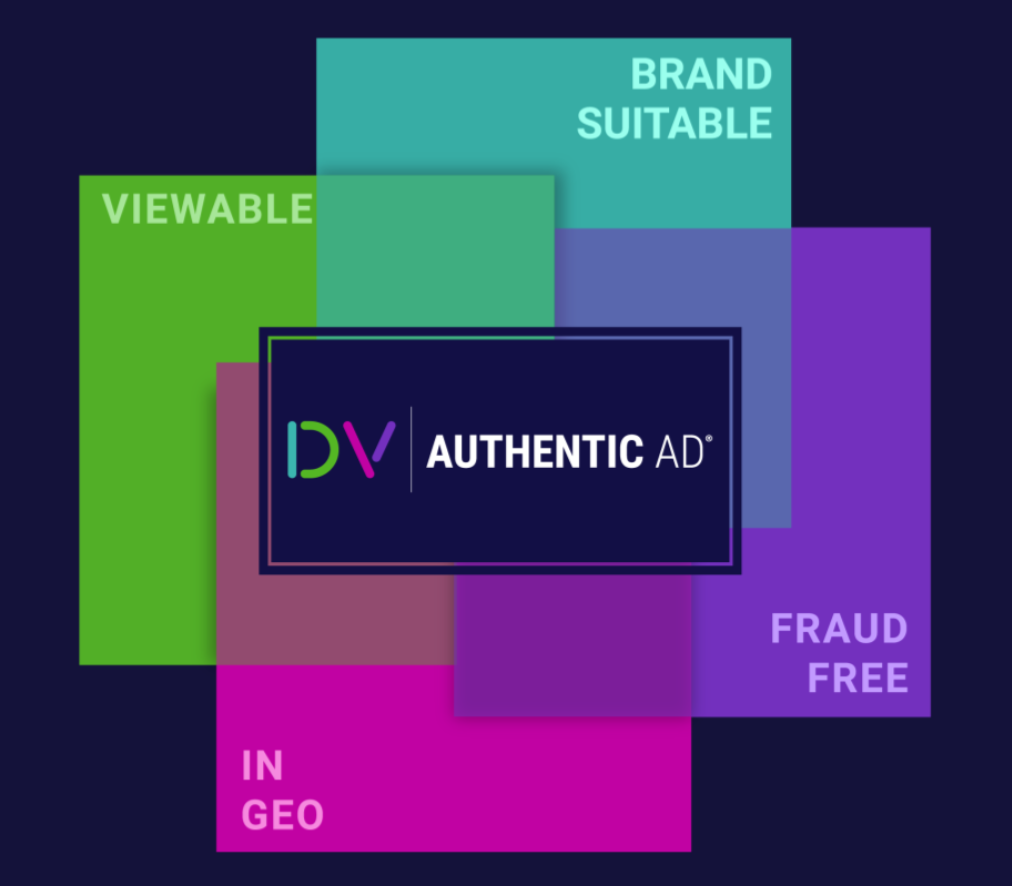
DoubleVerify (DV) offers the DV Authentic Ads service - which allows us to set up and monitor the quality verification of ads, both images and videos. This ensures that our investment is going to the right place.

DV Authentic Ad

Source: DoubleVerify

By using DoubleVerify, we can preserve and maintain brand safety and therefore the client’s reputation. By measuring ad visibility, we can ensure that ads are seen, but we can also prevent fraud and bots. This allows us to make sure that our ads are only shown to real people.

The service can be used for any image format - whether a static banner or a dynamic cuecard. For video, it can also work with all formats, across the content network and YouTube. DoubleVerify also works with the biggest social media networks, so we can check the effectiveness of campaigns on platforms like X, Snapchat, Pinterest, Meta and Tiktok.

The service is usable for RTB campaigns managed through CM360 and DV360 platforms (in which we at Proficio are certified experts) but also for Meta campaigns and other social networks.


Source: DoubleVerify

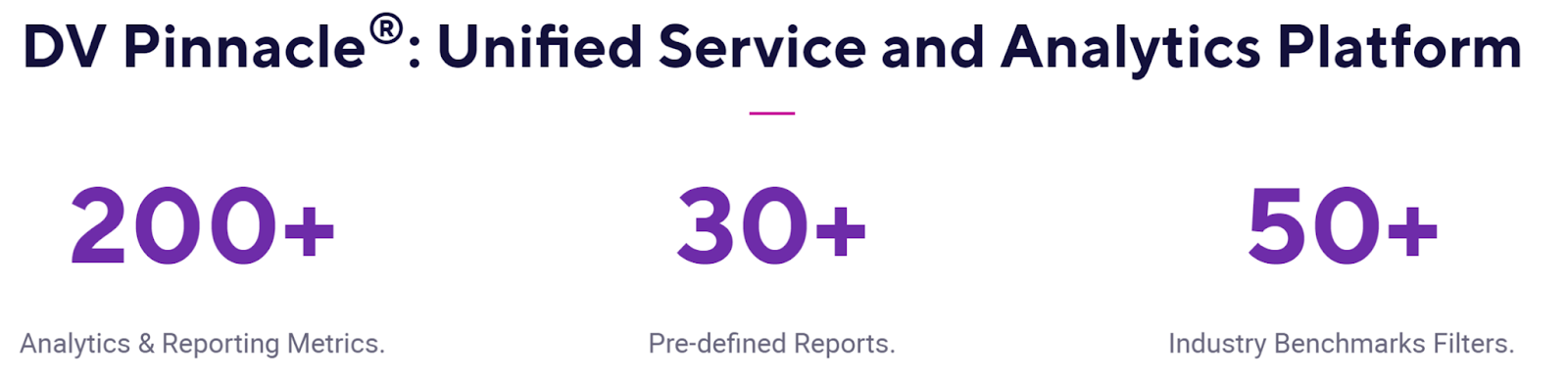
DV Pinnacle is a platform that brings together both setup and analytics services from DoubleVerify. It offers more than 30 report templates with over 200 metrics.

Putting it into practice

We’ll share with you the results of RTB campaign measurement for two of our clients whose approach to brand safety was very different from the start. Both of these clients used video campaigns during the period in question, making the comparison between them all the more relevant. But each test was completely different - given the campaigns and environments they ran, but also given the way both brands work with their brand safety. 

In both cases, we worked not only with monitoring situations where and when the ads were shown, but also with filtering or blocking low-quality placements. We invested lower thousands of CZK in using DV services for these two selected clients together.

Each client worked differently with their brand:

  • Client X works with their brand safety as much as possible, eliminating poor quality placements, page lists, negative keywords, filtering by sensitive content, etc. on all platforms. In this case, the investments led to confirming or disproving the hypothesis of whether we have the Brand Safety settings underpinned sufficiently already without DV. 
  • Client Y, on the other hand, works with brand safety in a very basic setup. So in this case, we wanted to test how much DV would help us improve brand safety and increase not only the viewability of ads, but also the limitation of bots and explicit content (i.e. topics like drugs, tragedy, guns, violence). These are criteria that can already be filtered in DV360, but also other, expanded content and new topics, or the same topics but with more emphasis (e.g. limiting pages with people in their underwear while choosing to strictly limit sensitive sexual content).

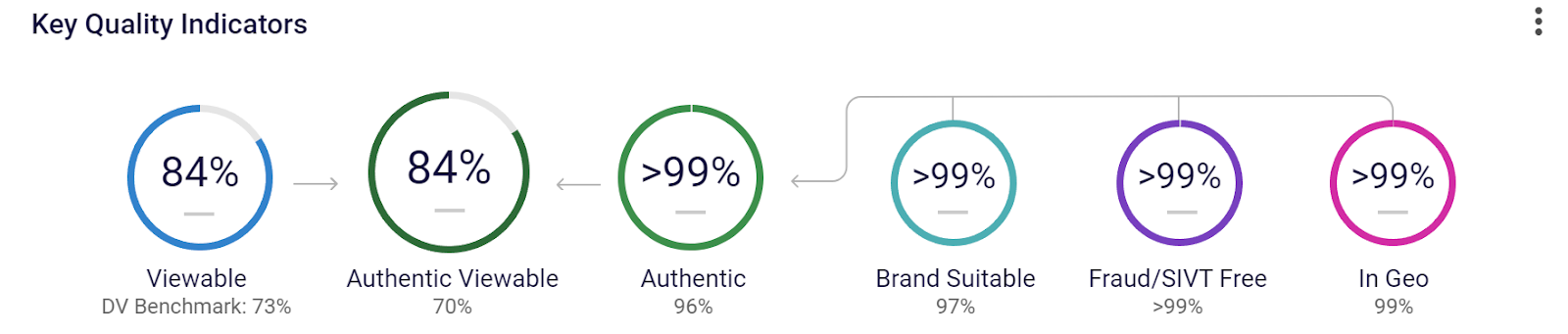
There are a large number of metrics by which to evaluate the success or failure of campaigns. But DV Pinnacle offers a very simple and intuitive Key Quality Indicators report that allows us to see the most important metrics at a glance, on a clear and interactive graph:


Source: DoubleVerify

For Client X, we achieved 84% Authentic Viewable impressions, while the DV benchmark average is only 70%. The Authentic, Brand Suitable, Fraud/​SIVT Free and In Geo metrics can’t even be higher (the system will never offer 100% here), so our campaigns performed at their best here as well.

Ad viewability was at a high 84%, which is a very decent result for video on a content network - not only based on experience, best practices and internal data. 

It is also true according to the DV benchmark, which is only 73%.

DV Metrics: Authenticity in the starring role

One of the main metrics that DV tracks with its tools is Authentic Viewable. This is a percentage measure of when an ad is both viewable and authentic. In order to be viewable, it must (similar to other systems) be seen for at least 1 second out of 50% of its size for an image ad, or 2 seconds out of 50% of its size for a video ad. This rate is shown in the graph by the blue pie chart on the left.

To be authentic, an ad must meet the following 3 criteria:

  • Brand Suitable 
  • Fraud/​SIVT Free 
  • In Geo

High percentages for Brand Suitable are achieved by displaying the ad on placements that do not fall into risk categories. These include, but are not limited to, drugs, alcohol, scandals, explicit content, among others. Fraud/​SIVT Free will be close to 100% when ads are shown to real people and not just bots, or within other fraud and set criteria. In Geo tracks the display of your ads in the location you set. 

These 3 values are then used as inputs to the Authentic aggregated value, which proportionally enters the main metric.

In the chart, you can see the grey percentages below each metric name. These show the DV benchmark, i.e. the comparison of our values with all others that have been measured on the platform by DV. This benchmark can also be filtered so that we can get closer to the specific industry, geolocation and other parameters to make the comparison more relevant. The only limitation comes when the targeting is too narrow - unfortunately DV will not offer a comparison at that point, as the benchmark needs at least a few billion impressions to generate results.

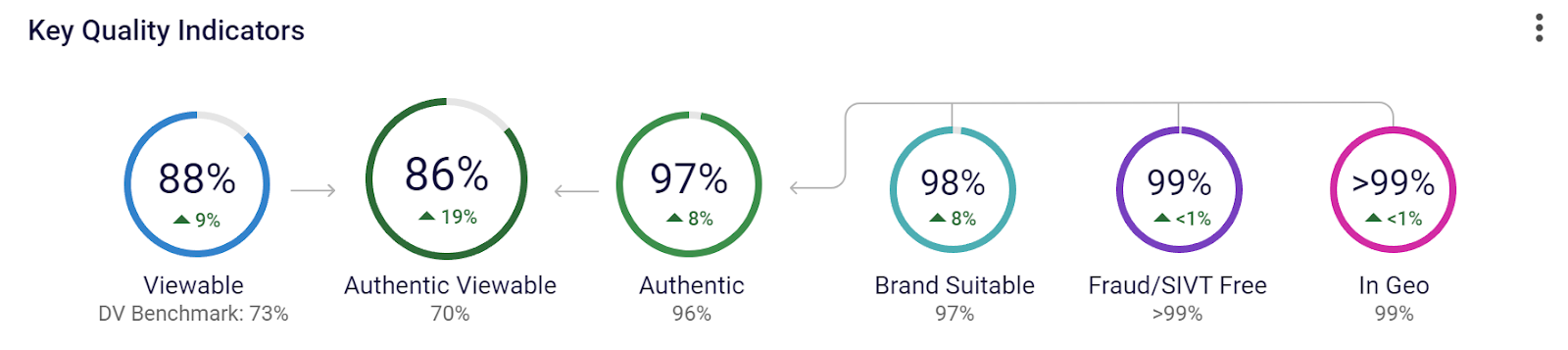
This graph belongs to client Y:


Source: DoubleVerify

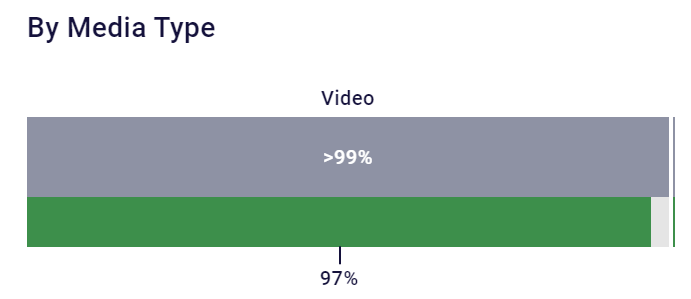
Client Y achieved an even higher 86% in the Authentic Viewable metric. Authenticity in this case is “only” 97% because the final result is reduced by the missing 1-2% in the Brand Suitable metric. This one is lower due to incidents where ads were allegedly shown on poor sites that do not fall under the chosen brand suitability setting.

Other important metrics

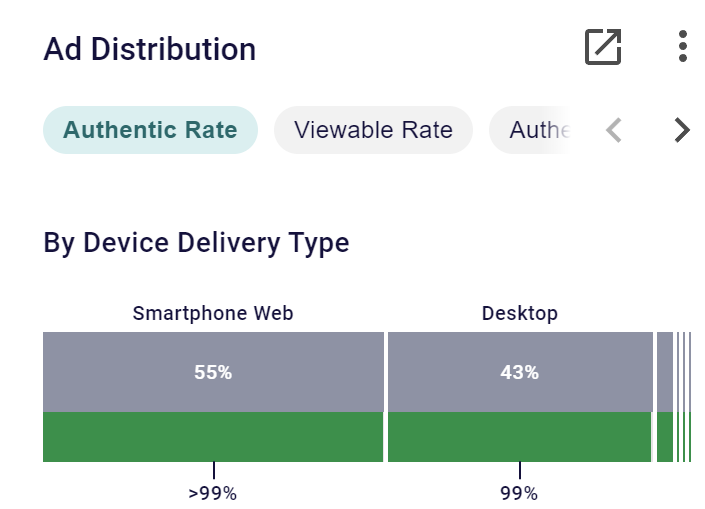
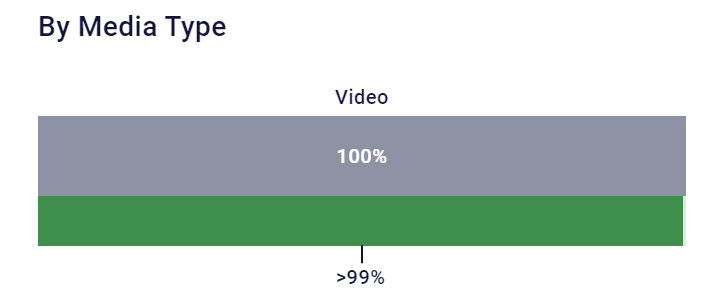
For client X, we can see the % distribution of spends between devices and also what percentage of them were authentic. As the metrics in the Overview report suggested, we see >99% authenticity across all devices.


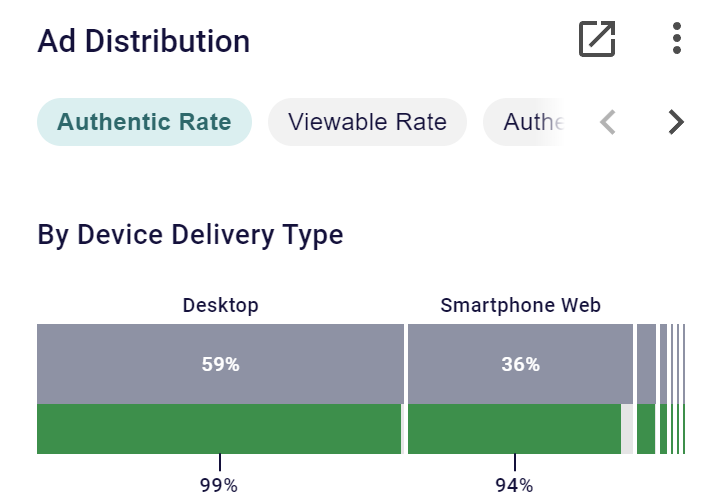
For client Y, the authenticity for desktop is consistently at 99%, however, we can easily detect lower authenticity for web on phones here, despite its lower representation compared to client X.

Authentic lift

The final metric worth tracking is Authentic Lift. This value simply tells you the percentage difference between ad authenticity before and after using DV Authentic Ads using a simple graph. This way, you can quickly check if DV usage makes sense for that particular customer.

If a customer is already fully engaged in the topic of brand safety, researching poor quality placements in depth, excluding keywords and topics, etc., it is likely that using DV services will not have a very high impact. However, if a client is not working with these issues at all or only to a limited extent, engaging DV Authentic Ads can be very helpful. 

This is the case in the following example:
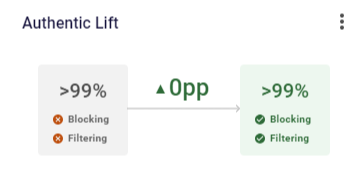

Source: DoubleVerify

For Client X, who is fully committed to brand safety topics beyond the use of DoubleVerify, the Authentic Lift is not really increasing. Filters and other settings in DV correlate with those in ad systems. So, while DV doesn’t bring an increase in ad authenticity, it certainly helped support the hypothesis in this case that we are doing a great job with the client’s brand even without this tool. Therefore, its involvement clearly confirmed our already successful work.
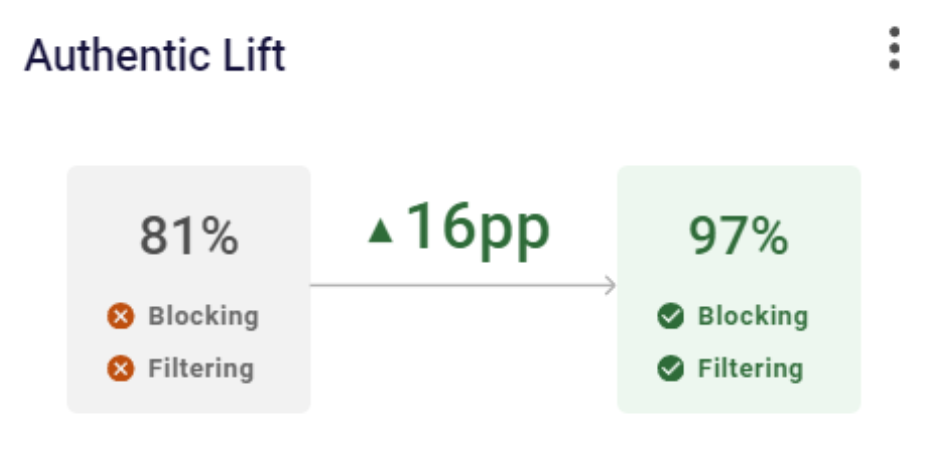

Source: DoubleVerify

For Client Y, Authentic Lift went from just 81% to a high 97% thanks to the DoubleVerify setting. Thanks to this, we have included things like blocking low-quality placements, filtering placements that don’t fall into the set filters under brand suitability (explicit content, etc.), as well as limiting sites with traffic from bots or related to other scams.

The difference between these clients in previous brand safety work is noticeable.

The use of DV confirms this.

So with low CPM fees, we can either verify that we are doing our job at a top level, as in the first case, or alternatively, enrich our setup with DV settings to achieve the highest Authentic Lift and Authentic Viewable impressions.

In conclusion

The DV setup at Client X has helped us to clarify that we are doing our work at the highest possible level even without using DV. Client Y, on the other hand, has benefited from DV engagement by 16% - this will help to increase the effectiveness of the ads issued as well as placement on higher quality spots.

Have a look at our work

29. 09. 2024