Your campaign is on track. Impressions are growing, CPM looks healthy and the report is showing green across the board.
Should you increase the budget? And if results fall short, do you need to change the strategy, adjust the creative, or investigate a setup error?
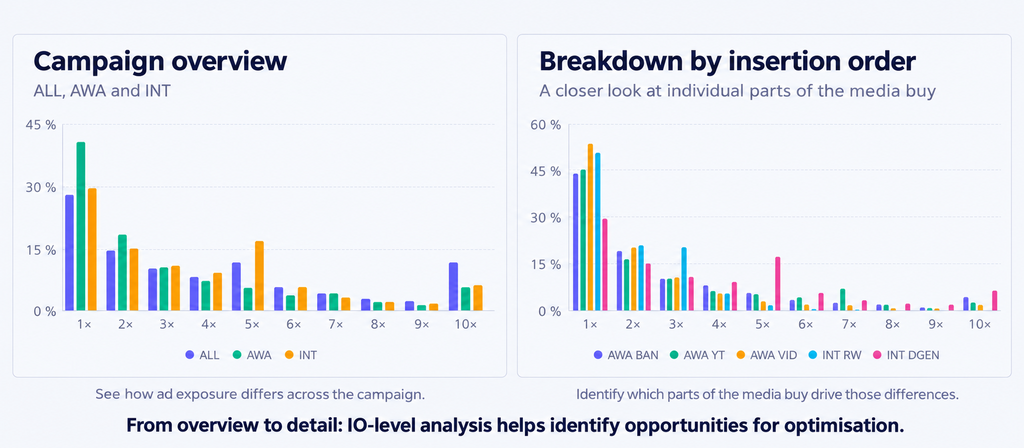
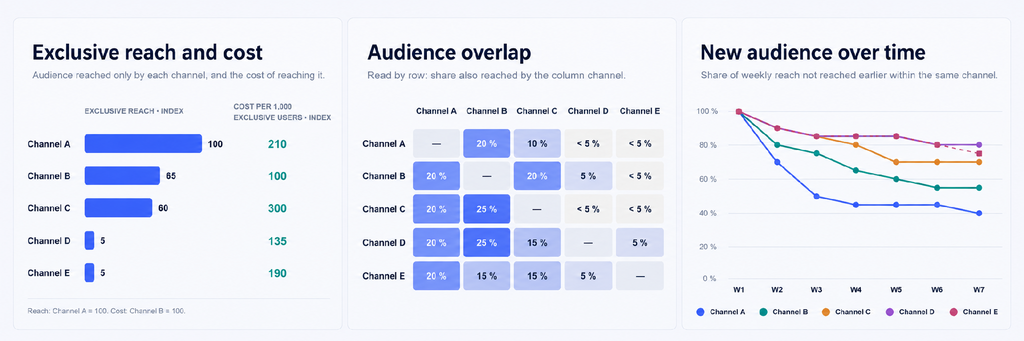
In both cases, you need to understand what is behind the results. Are you reaching new audiences or the same people repeatedly?
-
Does the creative capture attention and communicate your message?
-
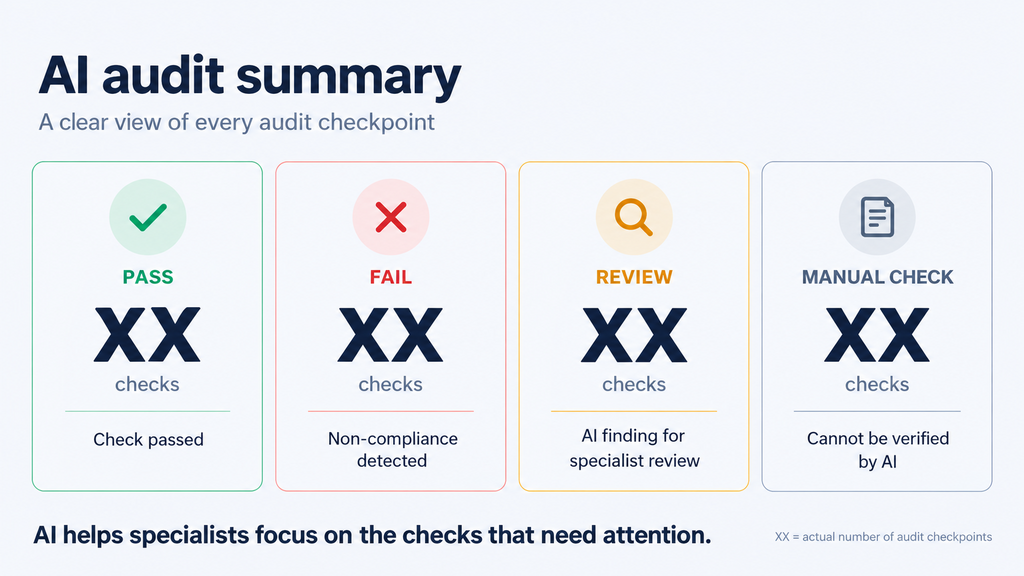
Does the campaign setup match the brief?
-
And what do the results tell you about the contribution to your brand and how to use the remaining budget?
We want to devote more attention to answering these questions. That is why we are bringing AI into our daily work at Proficio: connecting it with client materials and advertising platforms, building our own skills and knowledge base, and using vibe coding to create applications for specific team needs.
For clients, these technologies matter when they improve how we manage their investment.
AI needs more than the latest report
Campaign results make sense in the context of the brief. We need to understand what the campaign was intended to change, the role of each channel and any adjustments made along the way.
This information is often spread across emails, tasks, shared documents and advertising platforms. At Proficio, we use MCP connections provided by Databy to give AI access to available information from tools such as Asana, Slack, email, shared drives and selected advertising platforms.
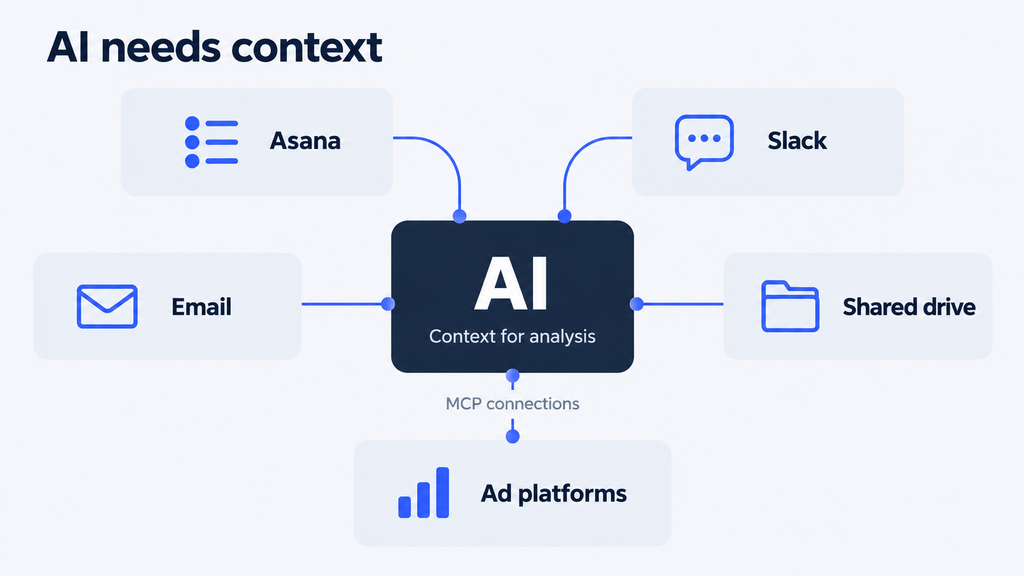
When analysing performance, we can refer to the brief, previous recommendations and changes agreed with the client alongside the results. This helps us assess why campaigns perform differently and whether each is fulfilling its purpose.
For clients, this means recommendations grounded in their situation and objectives. A specialist verifies the source material, assesses AI’s conclusions and decides what they mean for the next steps in campaign management.
Knowledge base and skills: turning experience into a working process
Access to data is a starting point. To be useful, AI also needs to understand how we work with it.
We are building a knowledge base of our standards and experience. It includes guidance on reading media plans, interpreting and evaluating metrics, using consistent naming conventions and configuring campaigns across advertising platforms. It also covers measurement requirements, connections between systems and brand safety.
We continuously expand this knowledge base with lessons from audits and analysis: recurring errors, situations that need closer assessment and examples that help interpret results correctly.
Capturing the reasoning behind our practices matters too: why we use a particular setup and when a different approach is needed.
The knowledge base supports skills: defined procedures for recurring tasks. They specify the inputs AI needs, what it should check, the steps to follow and the expected output. We do not have to explain our experience from scratch with every request.
We use AI for reach analysis and the evaluation of Brand Lift studies, ongoing performance evaluation and optimization recommendations.
It also helps us prepare assets for ad formats that combine images and text, check advertising materials supplied by clients and build results presentations. We are progressively turning these activities into shared team skills.